The Future of PHP in the AI-driven Web
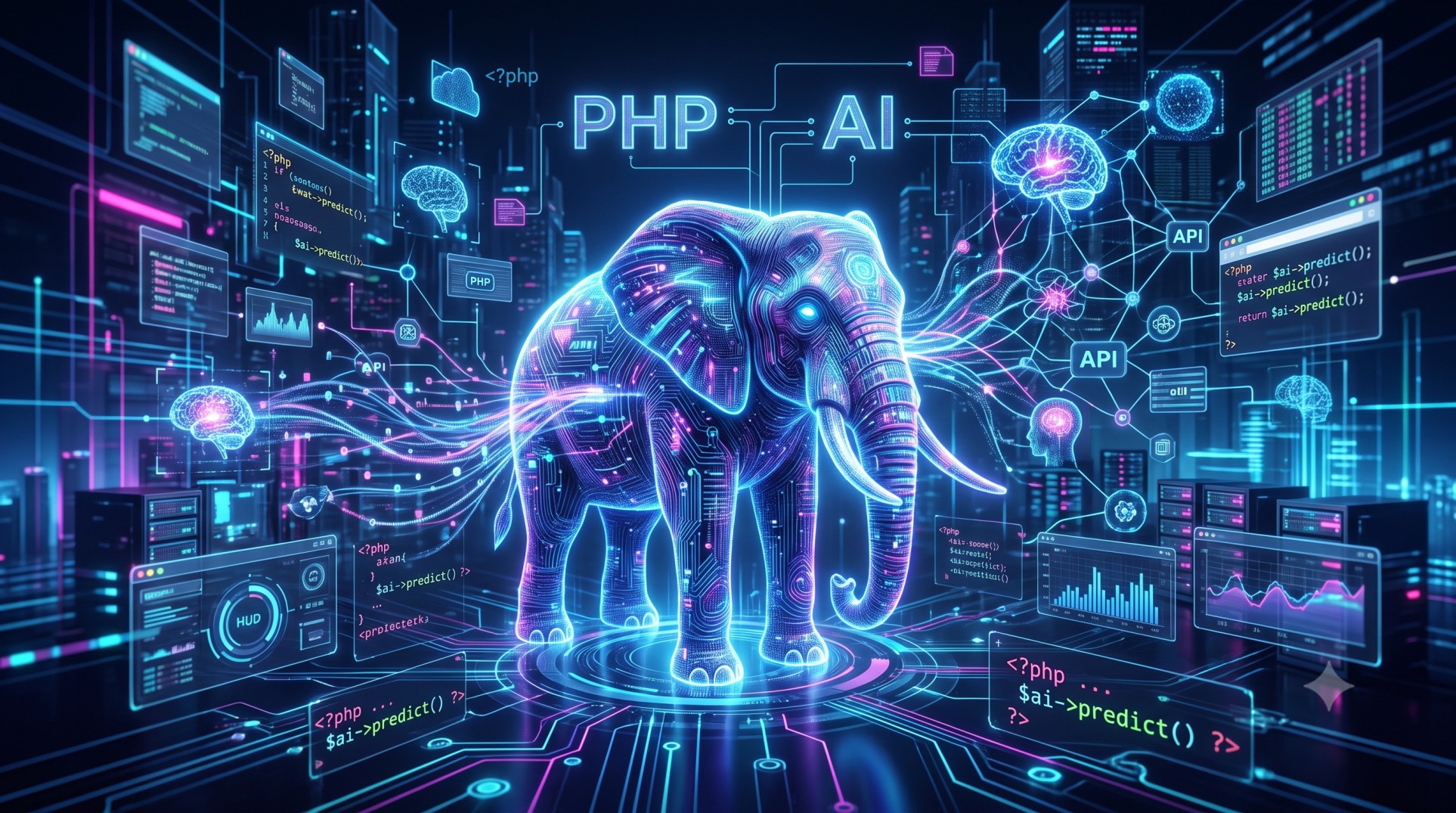
PHP is one of the most widely used languages in web development. For years, it has powered major platforms such as WordPress, Drupal, Facebook (initially), and large-scale enterprise systems across the world. Despite claims that “PHP is dying,” the language continues to evolve — adapting to modern development practices, cloud-native applications, and now, AI-driven web experiences.
As artificial intelligence reshapes how applications are built and how users interact with technology, many developers wonder:
Does PHP have a place in the AI-first future?
The answer is yes — and the future looks surprisingly strong.
This article explores how PHP is evolving, how it fits into the AI-driven landscape, and what developers should focus on to remain relevant.
PHP's Continued Dominance in Web Development
Before diving into AI, it's important to understand PHP's persistent popularity:
-
Over 76% of websites still use PHP on the server-side.
-
WordPress, built with PHP, powers more than 43% of the global web.
-
Modern PHP frameworks like Laravel, Symfony, and CodeIgniter have made development faster and more structured.
-
PHP has excellent compatibility with hosting services and cloud platforms.
This strong foundation ensures PHP remains a critical backend language, but the tech world is shifting toward intelligent, real-time, and predictive applications — which requires AI integration.
The Rise of AI-Driven Web Applications
AI no longer means futuristic robots. Today’s AI primarily enhances:
| Area | Examples |
|---|---|
| Customer Support | Chatbots, auto-response systems |
| Personalization | Recommendation engines, user behavior analytics |
| Automation | Workflow automation, smart triggers |
| Content Generation | AI-based content creation tools |
| Security | Fraud detection, anomaly monitoring |
These features are no longer optional. Modern users expect intelligent interaction.
And PHP can power all of these, thanks to API-driven AI services.
How PHP Fits into the AI Revolution
Unlike Python, which is central to building AI models, PHP excels at consuming AI models and integrating them into web applications.
PHP Doesn’t Need to Train AI — It Connects to It
Most production AI is deployed as:
-
REST APIs
-
GraphQL endpoints
-
Cloud-based model services (OpenAI, AWS AI, Google ML API, Hugging Face)
PHP is excellent at calling external APIs and integrating responses into web workflows.
Examples of AI Use Cases in PHP
| Feature | How PHP Handles It |
|---|---|
| Chatbots | Integrates OpenAI API to generate responses |
| Recommendation Engines | Calls ML service to get personalized suggestions |
| Voice Assistants | Works with Speech-to-Text & NLP APIs |
| Fraud Detection | Sends data to model — receives fraud risk score |
So instead of training ML models, PHP becomes the orchestrator of AI-powered user experiences.
AI Tools and Libraries Available for PHP
Here are popular libraries and services PHP developers can use today:
| Library / API | Purpose |
|---|---|
| OpenAI PHP SDK | ChatGPT / GPT model integration |
| Google Cloud AI | NLP, Vision, Translation APIs |
| AWS Rekognition | Image detection and face analysis |
| Hugging Face Inference API | Custom NLP / ML models |
| PHP-ML | Native machine learning algorithms (for small models) |
Among them, OpenAI integration has had the biggest impact, enabling:
-
Smart chat assistants
-
Content generation tools
-
Intelligent search engines
-
Automated coding helpers
-
Sentiment and tone analysis features
This is shaping the next era of PHP applications.
Case Study: Laravel + OpenAI
Laravel has become a favorite for AI-enabled applications because of:
-
Built-in HTTP client
-
Task scheduling
-
Queue system for background tasks
-
MVC structure for clean AI service integration
A typical AI-enabled Laravel web app might use:
-
Controller → Sends input text to AI API
-
Job Queue → Handles request asynchronously
-
AI Service Class → Formats result
-
Blade / API Response → Displays intelligent output
Frameworks like Laravel Nova, Filament, and Laravel Livewire also help developers create polished admin dashboards for AI workflows.
PHP in Real-Time AI Applications
With tools like WebSockets and Laravel Echo, PHP can now support:
-
Live chat bots
-
AI suggestions streaming in real time
-
Real-time user behavior analytics
Additionally, ReactPHP and RoadRunner are enabling long-running PHP applications, making them fast enough to support continuous AI interactions.
The Role of PHP Developers in the AI Era
PHP developers do not need to become AI model researchers — but they do need new skills:
Key Skills to Focus On
-
API Integration
-
Working with JSON / REST / GraphQL
-
Understanding AI model capabilities & limitations
-
Queue and background task processing
-
Data sanitization and preprocessing
-
Prompt engineering for AI models
New Job Opportunities Emerging
-
AI-enabled web app developer
-
Chatbot integration specialist
-
Custom CMS with AI automation
-
AI-driven eCommerce personalization expert
PHP developers who adapt will find more opportunities, not fewer.
Will PHP Ever Compete with Python in AI Model Training?
It’s unlikely.
Python is optimized for:
-
Numerical computing
-
GPU acceleration
-
Tensor libraries
-
Deep learning frameworks
PHP does not need to compete. Instead, it will continue to excel at:
Deploying, managing, integrating, and presenting AI-powered features to end users.
This makes PHP a key part of the AI delivery layer of the web.
Conclusion: PHP’s Future is Strong in the AI-Driven Web
The future of PHP is not about replacing data scientists or training neural networks.
The future is about leveraging AI services to build smarter web applications.
PHP remains:
-
Stable
-
Widely supported
-
Fast to develop with
-
Strong in CMS, eCommerce, and enterprise apps
-
Well-suited for API-driven architecture
As long as businesses need web interfaces, dashboards, content platforms, eCommerce stores, and SaaS applications, PHP will continue to thrive — now enhanced by AI.
So, the future is clear:
PHP + AI = Smarter Web Experiences.
And developers who embrace this shift will lead the next generation of intelligent web development.


