PHP vs Python in 2025: Which One Should You Learn?
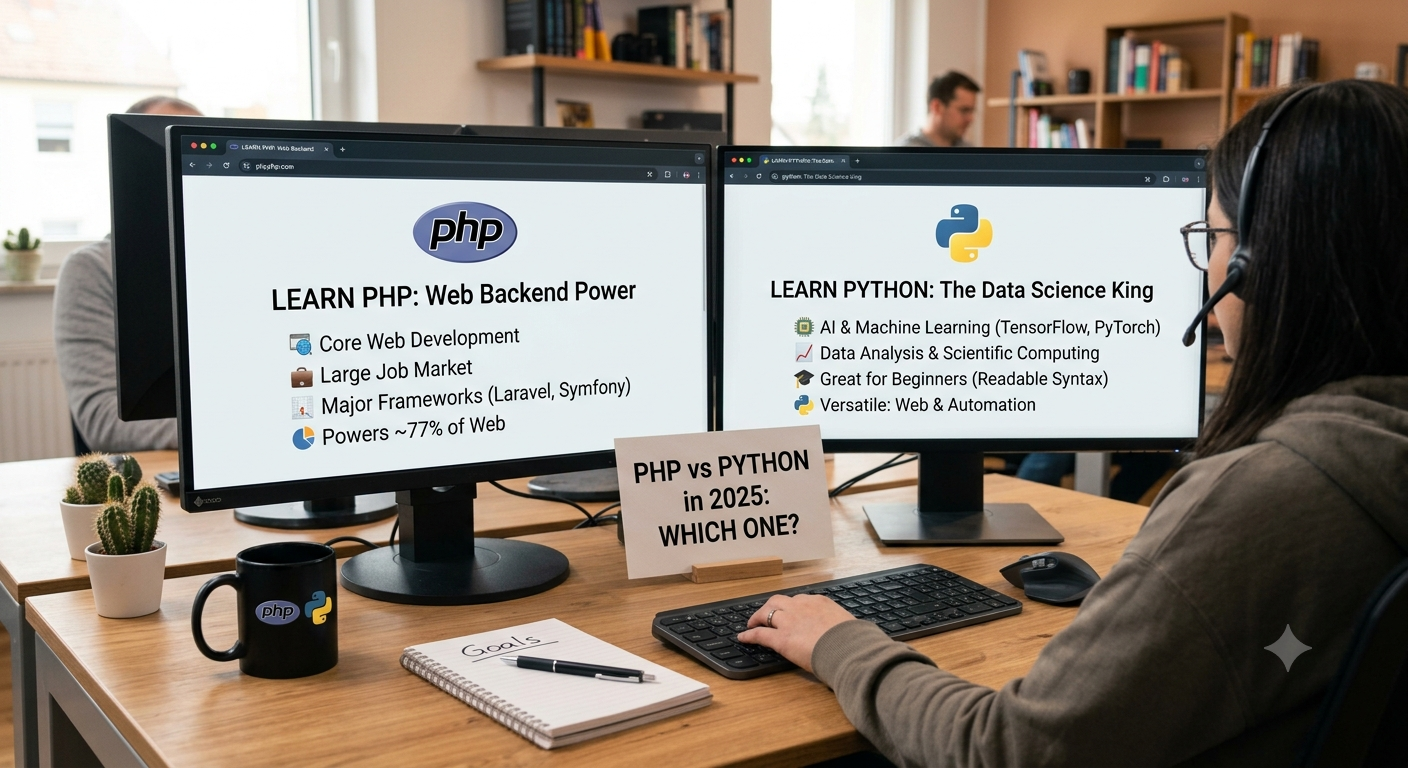
In 2025, the debate between PHP and Python continues to shape the future of web and software development. Both languages have matured over the years and now serve as the backbone for countless websites, APIs, and intelligent systems.
If you’re starting a tech career or planning to expand your skill set, you might be asking: Should I learn PHP or Python in 2025? Let’s explore both languages, their current relevance, and which one suits your career goals best.
The Evolution of PHP and Python
PHP: The Web’s Longtime Powerhouse
PHP (Hypertext Preprocessor) was introduced in 1995 and quickly became the foundation of dynamic websites. It powers platforms like WordPress, Drupal, and Magento, making it one of the most widely used web technologies in history.
With the release of PHP 8.3, the language has evolved beyond its early limitations. Modern PHP now supports object-oriented programming, JIT compilation, and strong type declarations, delivering performance comparable to other high-level languages.
Python: The Versatile All-Rounder
Python, created in 1991, was built for simplicity and readability. Its flexibility allows it to serve diverse domains — from web development and automation to machine learning and data science.
In 2025, Python continues to dominate industries focused on AI, automation, and cloud computing, backed by frameworks like Django, Flask, and FastAPI.
Popularity and Community Support in 2025
PHP’s Continued Dominance on the Web
Despite newer technologies entering the scene, PHP still powers over 75% of websites using server-side scripting. Modern frameworks such as Laravel, Symfony, and Slim have rejuvenated PHP with cleaner syntax, better performance, and security.
The Composer package manager and PSR coding standards have further standardized PHP development, ensuring cleaner and more maintainable code.
Python’s Global Growth
Python’s ecosystem extends far beyond traditional web development. Its widespread use in AI, automation, DevOps, and scientific computing has made it a top choice for beginners and professionals alike.
As of 2025, Python remains among the top 3 most popular programming languages, according to multiple developer surveys.
Performance and Speed
PHP 8.3 Performance
PHP’s Just-In-Time (JIT) compiler and optimized opcode caching have made it significantly faster than previous versions. It’s particularly efficient for request-based web applications, where execution speed and server response time are critical.
Python Performance
Python is traditionally slower due to its interpreted nature, but improvements like PyPy and async support in frameworks such as FastAPI have narrowed the gap. For CPU-intensive tasks, however, Python may still lag behind compiled or JIT-enabled languages like PHP or Go.
Ease of Learning and Syntax
Learning PHP
PHP is easy to pick up, especially if you already know HTML. It’s a great starting point for web developers, offering an intuitive syntax and a vast range of built-in functions.
Example:
PHP’s integration with web servers and databases makes it ideal for building websites, APIs, and e-commerce platforms quickly.
Learning Python
Python is globally recognized for its readable and beginner-friendly syntax, which resembles natural English.
Example:
This simplicity helps new developers focus on problem-solving instead of complex syntax, making Python the preferred language for AI, automation, and data analytics.
Frameworks and Ecosystem
Top PHP Frameworks
-
Laravel: Modern, elegant, and ideal for full-stack applications.
-
Symfony: Enterprise-level, modular framework for complex projects.
-
Slim: Lightweight and perfect for REST APIs.
These frameworks emphasize speed, security, and scalability, helping PHP remain a major player in modern web development.
Top Python Frameworks
-
Django: A full-featured, high-level web framework.
-
Flask: Minimal and flexible for small-scale projects.
-
FastAPI: Built for high-performance APIs and async applications.
Python’s frameworks are versatile and integrate seamlessly with AI, data, and cloud ecosystems, offering broad flexibility.
Use Cases in 2025
When to Choose PHP
-
Content Management Systems (CMS): WordPress, Joomla, Drupal
-
E-commerce Solutions: Magento, PrestaShop, OpenCart
-
Web Applications: SaaS dashboards, CRMs, and business portals
-
API Development: Using Slim or Laravel Sanctum
If your goal is to specialize in web and backend development, PHP remains a smart, industry-relevant choice.
When to Choose Python
-
AI and Machine Learning Applications
-
Data Analytics and Visualization
-
Automation and Scripting
-
Scientific and Cloud Computing
-
Modern Web Development with Django or FastAPI
Python is the go-to language for developers entering data-driven or AI-powered domains.
Job Market and Salary Trends in 2025
PHP Careers
PHP developers remain in high demand across web agencies, e-commerce platforms, and CMS-based companies.
Average salaries in 2025 range from $55,000 to $95,000 per year, depending on experience and region. Senior developers proficient in Laravel or API architecture can earn significantly more.
Python Careers
Python offers broader career opportunities. From AI engineering and data science to DevOps automation, Python developers can work across multiple industries.
The average salary for Python developers in 2025 ranges from $75,000 to $130,000 per year, with data-related roles commanding the highest pay.
Security and Maintenance
Both languages support strong security practices, but frameworks make a big difference.
-
Laravel (PHP) includes built-in tools to prevent SQL injection, CSRF, and XSS attacks.
-
Django (Python) offers automatic form validation, authentication, and secure defaults.
Ultimately, security depends on how well developers follow best practices and maintain their dependencies.
Community, Tools, and Documentation
Both PHP and Python have vibrant global communities.
PHP developers benefit from tools like Composer, PHPUnit, and Laravel Forge for deployment and testing.
Python’s ecosystem includes pip, virtualenv, Jupyter Notebooks, and Anaconda, making it a powerhouse for AI and analytics.
Whichever language you choose, you’ll find abundant online tutorials, community forums, and learning resources.
The Future of PHP and Python Beyond 2025
The Future of PHP
PHP’s future remains bright, especially with the ongoing improvements in PHP 9, expected to bring async processing, stronger typing, and further JIT optimizations. It will continue to dominate the web development ecosystem.
The Future of Python
Python will keep growing in AI, automation, cloud, and enterprise solutions. Its continuous integration with technologies like machine learning, quantum computing, and data visualization ensures long-term demand and relevance.
Conclusion
In 2025, both PHP and Python stand as top-tier programming languages — each excelling in its own domain.
If your passion lies in web development, content systems, or server-side APIs, PHP remains your best choice. It’s optimized for web workloads, easy to deploy, and backed by mature frameworks like Laravel and Symfony.
If you’re more interested in AI, data science, or automation, Python offers unmatched flexibility and versatility. Its clean syntax, powerful libraries, and broad community support make it ideal for the next generation of intelligent applications.
Ultimately, the smartest path is to choose based on your goals — and remember that learning both languages can make you a well-rounded, future-ready developer in an increasingly multi-language world.


