Building Multi-Tenant Apps in Laravel 11
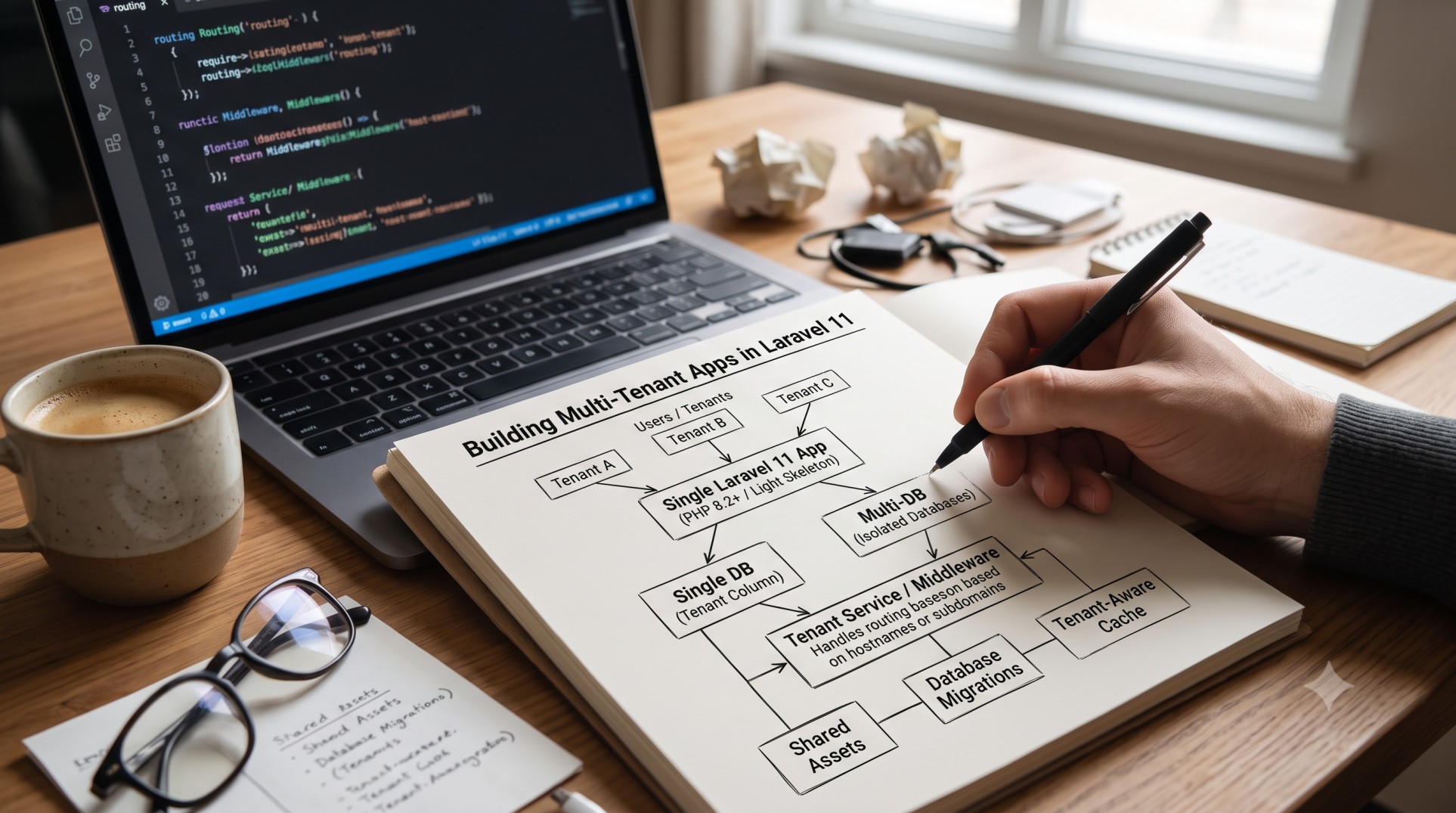
With the continuous growth of SaaS (Software as a Service) platforms, multi-tenant architecture has become one of the most important design patterns in modern web applications. Whether you're building CRM systems, analytics platforms, eCommerce admin suites, LMS tools, HR management systems, or multi-brand dashboards — multi-tenancy helps you serve multiple customers (or organizations) from a single Laravel application.
Laravel 11, with its simplified structure and performance improvements, is well-suited for building efficient and scalable multi-tenant systems.
In this guide, we’ll break down the key principles of multi-tenancy, explore implementation strategies, and understand how Laravel 11 makes the process clean and maintainable — even for complex SaaS deployments.
What is Multi-Tenancy?
Multi-tenancy means multiple users or organizations share the same application, but each tenant sees only their own data.
Imagine this scenario:
| Tenant | Business | Data Stored |
|---|---|---|
| Tenant A | Online Bookstore | Orders, Customers, Products |
| Tenant B | Fashion Retailer | Orders, Customers, Products |
Both tenants use the , but their data remains isolated.
Why Choose Multi-Tenant Architecture?
| Benefit | Explanation |
|---|---|
| Cost Efficient | One application to maintain instead of many |
| Easy Deployment | Roll out updates to all tenants simultaneously |
| Shared Infrastructure | Saves hosting & server resource usage |
| Centralized Maintenance | Logically cleaner and easier debugging |
| SaaS-Ready Structure | Ideal for subscription-based products |
Multi-tenancy is the backbone of companies like:
-
Slack
-
Shopify
-
HubSpot
-
Zendesk
Your SaaS could be next.
Multi-Tenancy Approaches in Laravel
There are three major approaches to storing tenant data:
1. Single Database, Shared Tables
All tenants share the same tables, differentiated by a tenant_id column.
Pros:
Fast to build
Minimal storage use
Works well for small-to-medium apps
Cons:
Data queries must always include tenant filters
Higher risk if isolation is misconfigured
2. Single Database, Separate Tables Per Tenant
Tables are duplicated per tenant (e.g., orders_tenant_12).
Pros:
Better separation of data
Cons:
Harder to maintain
Database grows rapidly
3. Multiple Databases Per Tenant
Each tenant has its own database.
Pros:
Strong data isolation
Better scaling control
Easy export/restore per tenant
Cons:
Requires more operational management
More complex migrations & maintenance
Laravel 11 Recommended Approach
For most SaaS products, the Multiple Database per Tenant method provides the best long-term flexibility and safety.
Laravel 11’s clean bootstrap structure and service providers make tenant database switching smoother than ever.
Core Concepts for Multi-Tenant Implementation
1. Tenant Identification
How does the app know which tenant is requesting?
Common identification strategies:
| Method | Example | Usage |
|---|---|---|
| Subdomain | tenant1.app.com | Most popular SaaS setup |
| Domain Mapping | tenantstore.com | White-label solutions |
| Route Prefix | app.com/tenant/123 | Internal dashboards only |
2. Tenant Model
Store tenant metadata, such as:
-
Company name
-
Database connection details
-
Subscription plan
-
Owner information
3. Database Switching
When a tenant makes a request, the app dynamically selects the tenant's database.
4. Middleware
Middleware ensures every request runs in the right tenant environment.
How Laravel 11 Simplifies Multi-Tenancy
Laravel 11’s new bootstrap and configuration structure makes it easier to:
-
Register tenant service providers
-
Override database configuration dynamically
-
Use cleaner middleware registration
-
Customize the application lifecycle early
This means less boilerplate and more maintainable tenant logic.
Typical Request Flow in Multi-Tenant Laravel App
Handling Authentication in Multi-Tenant Apps
Depending on whether users belong to:
-
Individual tenants only, or
-
Shared admin system
You may choose:
| Approach | For Applications |
|---|---|
| Tenant-Based User Tables | Company CRMs, HRMS, ERPs |
| Global User Table + Pivot to Tenant | SaaS with admin & multi-account access |
Laravel's guards and providers let you customize authentication per tenant.
Managing Migrations for Each Tenant
When tenants have separate databases, running migrations is crucial.
Best practice:
-
Run core migrations once globally
-
Run tenant migrations per tenant on onboarding
Consider:
-
Adding a command
php artisan tenant:migrate -
Automating migration on new tenant registration
Performance Considerations
Caching is critical
Use:
-
Redis for caching lookups
-
Store tenant configs in memory to avoid DB lookup per request
Queue Background Jobs
Heavy tasks should not block request flow.
Load Balancing & Horizontal Scaling
Container-based deployment works best:
-
Docker + Kubernetes
-
Laravel Octane (for ultra high throughput)
Security Considerations
| Area | Recommendation |
|---|---|
| Data Isolation | Never mix cross-tenant queries |
| Authorization | Use Policies & Roles per tenant |
| Backups | Enable per-tenant backup & restore policies |
| Audit Logs | Keep tenant-specific activity history |
Security must be explicit, not assumed.
When to Use Packages
If you want to accelerate development, reliable packages include:
| Package | Purpose |
|---|---|
| Stancl/Tenancy | Full multi-tenant framework support |
| Hyn/multi-tenant | Legacy solution (deprecated but informative) |
Package-based approaches save time but require understanding internal mechanics to avoid vendor lock-in issues.
Conclusion
Building multi-tenant applications in Laravel 11 provides a powerful foundation for launching scalable and profitable SaaS platforms. Laravel’s elegant architecture, improved performance model, and simplified configuration allow developers to structure tenant-aware application logic without unnecessary complexity.
By choosing the right:
-
tenant storage strategy
-
authentication model
-
database separation level
-
middleware-driven tenant resolver
you can create a SaaS product that is secure, stable, and ready to scale globally.
Laravel 11 is not just suitable for multi-tenancy — it’s optimized for it.


